.png)

.png)
The "Uncleanable" Window: Why Your Windows Look Foggy (And How to Fix It)
It’s a frustrating moment. You grab your glass cleaner and a microfiber cloth to wipe away a smudge on your living room window. You wipe the inside—the smudge is still there. You go outside and wipe the exterior—the smudge is still there.
You step back and realize it’s not a smudge at all. It’s a permanent, cloudy haze spreading across the glass. It looks like condensation, but it never wipes off and never dries out.
If this sounds familiar, we have bad news and good news.
The Bad News: You cannot clean this. No amount of Windex, vinegar, or razor blades will remove that fog. That fog is moisture trapped inside your double-pane window.
The Good News: You probably don't need to rip out your entire window frame to fix it.
At 2 Brothers Windows, we specialize in solving this exact problem. It’s called Seal Failure, and in Utah’s climate, it is one of the most common issues homeowners face. Here is the deep dive into why your windows are failing and the smart way to repair them.
1. Anatomy of a Modern Window (The IGU)
To understand why your window looks like a foggy shower door, you have to understand how it was built.
Most modern homes (built after 1990) use Double-Pane Windows. Instead of a single sheet of glass, your window is actually a "sandwich" made of two pieces of glass with a spacer bar in between. This entire "sandwich" is called an IGU (Insulated Glass Unit).
The Spacer: This separates the glass panes and creates an air gap.
The Seal: A rubberized sealant (usually silicone or polyisobutylene) goes around the edge to glue the glass to the spacer and make it airtight.
The Gas: The space between the glass isn't just empty air; it’s usually filled with Argon Gas to stop heat transfer.
When that seal around the edge breaks, the Argon gas leaks out, and regular air (containing moisture) leaks in. That moisture condenses on the cold glass inside the unit, creating that permanent "fog."
2. The Utah Factor: "Solar Pumping"
Why do window seals fail? Sometimes it’s just old age. But here in Utah, we have a window-killing phenomenon known as Solar Pumping.
Utah has extreme temperature swings. It is not uncommon for a window to be 15°F at night and then get hammered by the sun and heat up to 90°F+ by the afternoon.
When it gets hot: The gas inside your double-pane window expands. This pushes outward against the glass and the seals. (Think of a balloon inflating).
When it gets cold: The gas contracts and shrinks. This pulls the glass inward. (Think of a balloon deflating).
This constant expansion and contraction is called "Thermal Cycling" or Solar Pumping. Over the course of 10 or 15 years, this daily pumping action eventually wears out the sealant material. Small micro-cracks form, the seal pops, and your IGU fails.
Because of our high altitude and intense UV exposure, windows in Davis and Salt Lake counties often fail faster than windows in milder climates.
3. Why You Shouldn't Ignore a Foggy Window
Is a broken seal just an aesthetic problem? Can you just ignore it?
You can, but it’s costing you money.
1. Energy Loss: The Argon gas that leaked out was your insulation. It acts like a thermal blanket, stopping winter cold from entering your home. Once that gas is replaced by regular air, your window loses a significant portion of its R-Value (insulation power). A foggy window is basically a hole in your home’s thermal envelope, forcing your furnace to work harder.
2. Permanent Glass Etching: That moisture inside the glass isn't just water; it’s mineral-rich condensation. Over time, the constant wet/dry cycle will physically etch the glass from the inside, making the white haze permanent and opaque.
3. Mold Growth: In severe cases, if the seal failure is large enough, moisture builds up to the point where black mold begins to grow on the spacer bar inside the glass. You definitely don't want that sporulating near your living areas.
4. The Solution: Glass Replacement vs. Window Replacement
This is the most important part of this article.
When homeowners see a foggy window, they panic. They think, "Oh no, I have to tear out the window, damage my stucco, ruin my interior paint, and spend $20,000 on new windows."
Stop. That is usually not true.
In 90% of seal failure cases, the frame of the window (vinyl, wood, or aluminum) is perfectly fine. It’s just the glass unit (IGU) that has failed.
The "Glass-Only" Repair: At 2 Brothers Windows, we can pop out the old, foggy glass unit and install a brand new, factory-sealed IGU into your existing frames.
Cost: significantly cheaper than full window replacement.
Mess: Zero stucco damage, zero painting required.
Time: The installation often takes less than an hour per window.
You get the performance of a brand-new window (restored clarity, fresh Argon gas, new Low-E coatings) without the construction headache.
5. When Should You Do a Full Replacement?
We pride ourselves on honesty. We won't sell you a full replacement if a repair will work. However, there are times when replacing the whole window is the smarter choice:
The Frames are Damaged: If your vinyl frames are cracked, warped, or brittle, putting new glass in them is a waste of money.
The Mechanism is Broken: If the window won't open, stay up, or lock, and the parts are obsolete, a full replacement upgrades your security and function.
You Want an Upgrade: If you have old aluminum windows and want to switch to energy-efficient vinyl, a glass repair won't get you there. You need a full frame replacement.
Conclusion: Clarity is Just a Phone Call Away
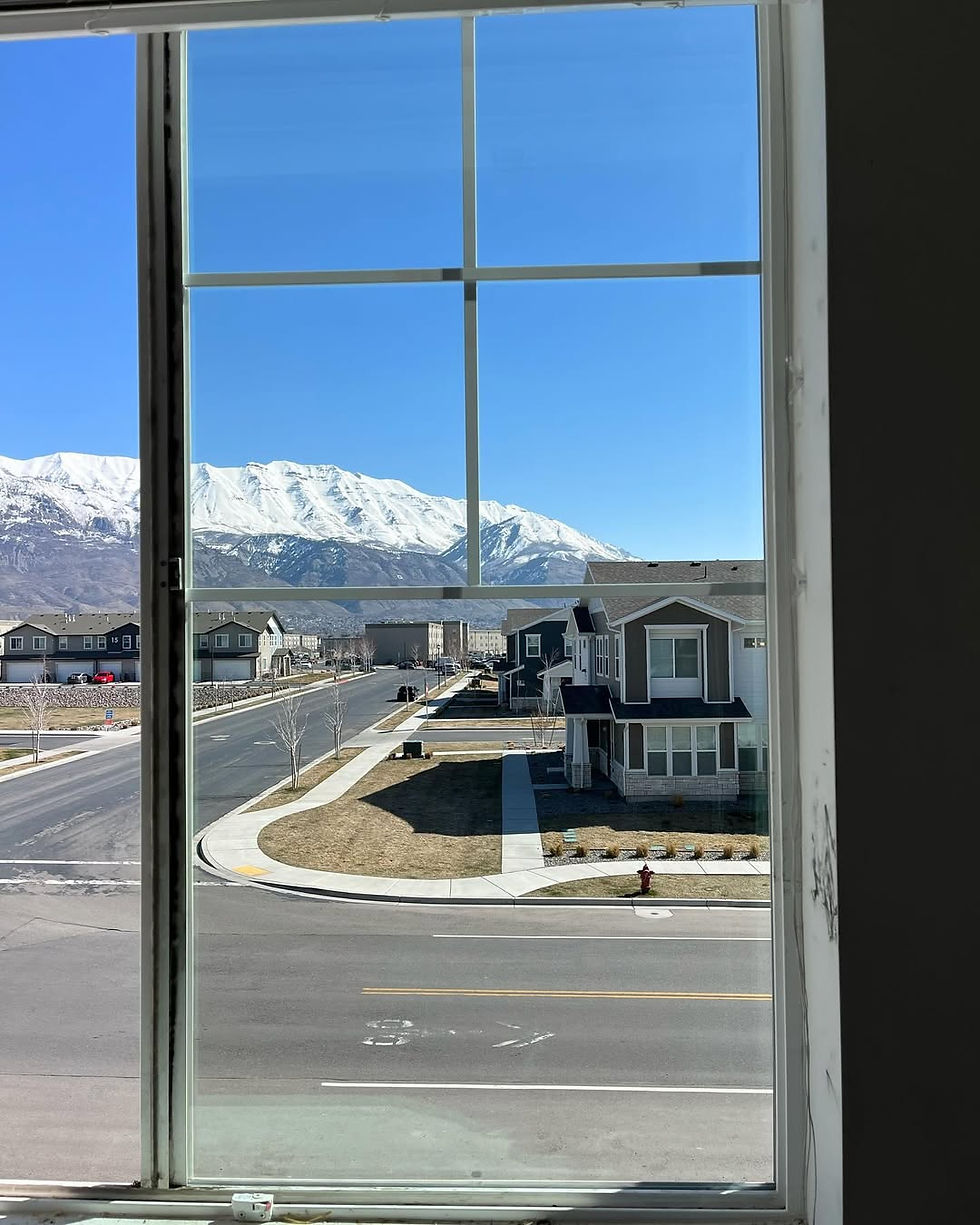
You don't have to live with the fog. You don't have to lose your view of the Wasatch Front because of a failed seal.
If your windows look dirty no matter how much you scrub, it’s time to call in the experts. We can assess your seals, measure your glass, and give you a clear, honest recommendation on whether to repair or replace.
Don't replace your whole house when you just need new glass.
Frequently Asked Questions (FAQ)
Q: Can a broken window seal be repaired without replacing the window? A: Yes! In most cases, you do not need to replace the entire window frame. A professional can remove the failed Insulated Glass Unit (IGU) and replace it with a new one. This restores the window's clarity and insulation value for a fraction of the cost of a full replacement.
Q: Why do my windows look foggy in the morning? A: If the fog is on the surface and wipes off, it is just condensation (humidity). If the fog is between the panes of glass and cannot be wiped off, it is a failed window seal. This means the insulating gas has escaped and moisture has entered the unit.
Q: Does a broken window seal affect my heating bill? A: Yes. Double-pane windows rely on Argon gas sealed between the panes to insulate your home. When the seal breaks, that gas escapes, significantly lowering the window's energy efficiency (R-value) and allowing heat to escape in the winter.
Q: How long does a double-pane window seal last? A: On average, modern double-pane window seals last between 10 to 20 years. In climates with extreme temperature swings like Utah, "Solar Pumping" (expansion and contraction) can cause seals to fail sooner.
Q: Can I drill a hole in the window to let the moisture out? A: We strongly advise against this. While some "defogging" services drill holes to vent the moisture, this removes the insulating gas and leaves you with a single-pane performing window. It effectively breaks the thermal barrier permanently. Replacing the IGU is the only way to restore the insulation value.
Struggling with foggy windows? Contact 2 Brothers Windows today for a free assessment.


Comments